
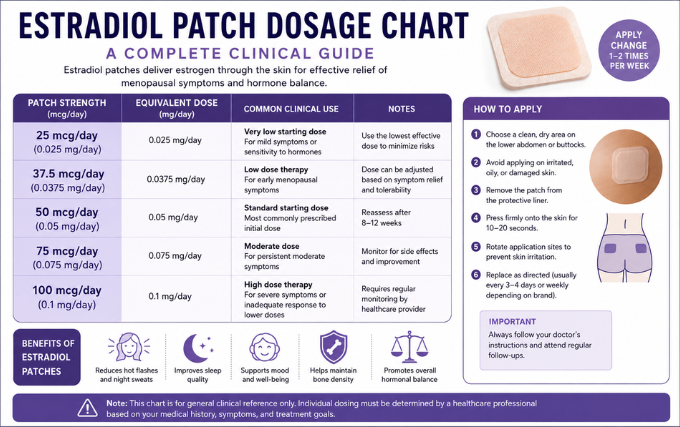
The estradiol patch dosage chart is an important reference for understanding how transdermal hormone replacement therapy (HRT) is prescribed and adjusted. Estradiol, a form of estrogen, plays a key role in managing symptoms of menopause, preventing bone loss, and supporting hormone balance in individuals who need estrogen therapy for medical reasons.
The transdermal patch is one of the most commonly used delivery methods because it provides a steady release of hormone through the skin into the bloodstream. This helps maintain more stable estrogen levels compared to oral medications, reducing certain risks associated with hormone fluctuations.
What Is an Estradiol Patch?
An estradiol patch is a small adhesive patch placed on the skin that releases the hormone estradiol gradually over time. Estradiol is the primary form of estrogen used in hormone therapy. A commonly used medication in this category is Estradiol.
The patch is typically applied to areas such as the lower abdomen or buttocks, where it absorbs through the skin and enters the bloodstream.
Why Use a Patch Instead of Pills?
Compared to oral estrogen, patches offer several advantages:
- More stable hormone levels
- Lower risk of liver metabolism effects
- Reduced risk of certain blood clot complications
- Convenient dosing (usually changed 1–2 times per week)
Because of these benefits, estradiol patches are widely used in clinical hormone therapy.
How Estradiol Patch Dosage Works
Estradiol patch dosing is not one-size-fits-all. Instead, it is based on microgram (mcg) delivery per day, which indicates how much estradiol is released into the body over 24 hours.
Doctors typically start with a low dose and adjust gradually depending on:
- Symptom relief (hot flashes, night sweats, mood changes)
- Side effects
- Age and health conditions
- Treatment goals (menopause vs. other hormone needs)
The goal is to use the lowest effective dose that controls symptoms safely.
Estradiol Patch Dosage Chart (Clinical Reference)
Below is a simplified clinical estradiol patch dosage chart commonly used in hormone therapy practice:
| Patch Strength (mcg/day) | Common Clinical Use | Notes |
| 0.025 mg/day (25 mcg) | Very low starting dose | Often used for mild symptoms or sensitivity |
| 0.0375 mg/day (37.5 mcg) | Low dose therapy | Early menopausal symptoms |
| 0.05 mg/day (50 mcg) | Standard starting dose | Most commonly prescribed initial dose |
| 0.075 mg/day (75 mcg) | Moderate dose | For persistent moderate symptoms |
| 0.1 mg/day (100 mcg) | High dose therapy | Severe symptoms or inadequate response to lower doses |
Important Clinical Note
This chart represents general prescribing ranges. Individual dosing must always be determined by a healthcare provider based on personal medical evaluation.
How Doctors Choose the Right Dose
Choosing the correct estradiol patch dose depends on several clinical factors:
1. Severity of Symptoms
Women experiencing severe hot flashes, insomnia, or mood swings may require higher starting doses compared to those with mild symptoms.
2. Age and Time Since Menopause
- Early menopause: often lower doses are effective
- Late menopause or long-term symptoms: moderate doses may be needed
3. Medical History
Conditions such as:
- History of blood clots
- Liver disease
- Breast cancer risk factors
can influence whether lower doses or alternative therapies are used.
4. Treatment Goals
Some patients use estradiol patches for:
- Menopause symptom relief
- Bone density protection
- Hormone replacement therapy in gender-affirming care (under specialist supervision)
How to Apply an Estradiol Patch
Correct application ensures proper absorption and effectiveness.
Step-by-Step Instructions:
- Choose a clean, dry area of skin (lower abdomen or buttocks)
- Avoid oily, irritated, or damaged skin
- Remove the patch from packaging
- Press firmly onto the skin for about 10–20 seconds
- Rotate application sites to prevent skin irritation
- Replace according to schedule (commonly every 3–4 days or weekly depending on brand)
Tips for Best Results:
- Avoid applying near the waistline where clothing may rub it off
- Do not cut patches unless instructed by a doctor
- If a patch falls off, replace it as directed in medical instructions
Dose Adjustments and Monitoring
Estradiol therapy is typically adjusted over time.
When a Dose May Be Increased:
- Persistent hot flashes or night sweats
- Continued sleep disturbances
- Ongoing mood instability
When a Dose May Be Reduced:
- Breast tenderness
- Headaches
- Fluid retention
- Excessive hormone levels in blood tests
Doctors often reassess treatment every few months during early therapy.
Possible Side Effects
Like all hormone therapies, estradiol patches may cause side effects.
Common Side Effects:
- Skin irritation at patch site
- Breast tenderness
- Mild nausea
- Headaches
- Bloating
Less Common but Serious Risks:
- Blood clots (rare with patches but still possible)
- Stroke risk in certain populations
- Gallbladder issues
- Unusual vaginal bleeding
If any serious symptoms occur, medical attention should be sought promptly.
Benefits of Estradiol Patch Therapy
When used correctly, estradiol patch therapy can provide significant benefits:
- Reduction in hot flashes and night sweats
- Improved sleep quality
- Better mood stability
- Prevention of bone loss (osteoporosis protection)
- Support for overall hormonal balance
Because the hormone is delivered steadily, many patients find patches easier to tolerate than oral forms.
Who Should Avoid Estradiol Patches?
Estradiol patches may not be suitable for everyone. They are generally avoided in individuals with:
- History of estrogen-sensitive cancers (unless directed by a specialist)
- Active or past blood clots
- Severe liver disease
- Unexplained vaginal bleeding
A full medical evaluation is essential before starting therapy.
Clinical Monitoring During Treatment
Doctors often monitor:
- Symptom improvement
- Blood pressure
- Hormone levels (in some cases)
- Breast and pelvic health (as appropriate for age and risk)
Regular follow-ups help ensure safe and effective dosing adjustments.
FAQs
Q: How long does it take for an estradiol patch to work?
A: Most people notice symptom improvement within 1–2 weeks, but full effects may take several weeks.
Q: Can I shower or swim with the patch on?
A: Yes, most estradiol patches are designed to stay on during bathing and swimming, but they should be checked regularly for adhesion.
Q: What happens if I miss a patch change?
A: Apply a new patch as soon as remembered and continue the normal schedule. Do not double dose unless instructed by a doctor.
Q: Is a higher dose always better?
A: No. The lowest effective dose is preferred to reduce risks and side effects.
Q: Can estradiol patches be used long-term?
A: Yes, but long-term use requires regular medical review to assess risks and benefits.
Conclusion
The estradiol patch dosage chart provides a helpful clinical framework for understanding how hormone therapy is structured, but it is not a substitute for individualized medical care. Estradiol patches deliver consistent and effective hormone levels, making them a widely used option in menopause management and hormone therapy.
However, dosing must always be personalized. Factors such as symptoms, health history, and treatment goals all influence the final prescription. With proper monitoring and medical guidance, estradiol patch therapy can be a safe and effective solution for many patients seeking hormonal balance and symptom relief.
